Your Twitch Is a Transaction: How Big Business Turned Your Body's Reflexes Into a Revenue Stream

Photo: John Grayson, CC BY-SA 2.0, via Wikimedia Commons
Somewhere in a data center you'll never visit, a file exists that knows something about you that you don't know about yourself. It knows which images made your pupils dilate slightly before you scrolled past. It knows the exact duration of your gaze on a product you told yourself you didn't want. It knows your resting heart rate, and your stressed heart rate, and the hour of the day when the gap between those two numbers is biggest.
It doesn't know your name, necessarily. It knows something more useful: your body.
The Involuntary as Inventory
For most of human history, the unguarded body was private by default. Your flinch, your flush, your micro-expression of disgust or delight — these were experienced by whoever happened to be in the room and then they were gone. They left no record. They generated no data.
That's no longer true. The infrastructure for capturing, storing, and monetizing involuntary physical responses has been quietly assembling itself for over a decade, and it's now embedded in spaces most Americans move through every day — retail environments, offices, hospitals, airports, and the devices they carry in their pockets and strap to their wrists.
The industry has several names depending on who you ask. Affective computing. Biometric analytics. Emotion AI. What it amounts to is a systematic effort to turn the body's unscripted responses into structured data, and that data into commercial advantage.
Eyes on the Merchandise
Retail was an early adopter. Eye-tracking technology — initially developed for accessibility research and human-computer interaction — found a lucrative second life in consumer behavior analysis. Cameras embedded in store displays, digital kiosks, and even product packaging can now track where a shopper's gaze lands, how long it lingers, and what it skips. The data informs everything from shelf placement to packaging color to the height at which products are displayed.
This isn't hypothetical. Companies like Tobii and Lumen Research have built substantial businesses selling gaze analytics to retailers and advertisers. Nielsen, the same company that measures TV viewership, has invested heavily in biometric consumer research, running studies that attach physiological sensors to participants and measure their emotional responses to ads, store layouts, and product experiences.
The pitch to brands is straightforward: people lie on surveys, but bodies don't. If you want to know what someone actually responds to — not what they say they respond to — you measure the body.
The Office as Lab
The workplace has become one of the most aggressive sites of biometric surveillance. The pandemic accelerated this dramatically. As employers scrambled to monitor remote workforces, a cottage industry of productivity-tracking software emerged — tools that log keystrokes, track mouse movement, capture periodic screenshots, and, in some cases, use webcam data to assess whether employees appear engaged or distracted.
Some companies have gone further. Workplace wellness programs, initially framed as employee benefits, increasingly function as data collection mechanisms. Wearables distributed through corporate health plans capture continuous biometric streams — heart rate variability, sleep patterns, stress indicators — that flow back to insurers and, in some cases, employers. The terms and conditions are long and the consent is technically given, but the power asymmetry between an employee and their employer makes the voluntariness of that consent worth examining.
Amazon's fulfillment centers have been widely reported to use wearable devices that track workers' physical movements and proximity to each other. The stated purpose is safety and efficiency. The effect is a body that is never off the clock, never outside the measurement apparatus.
Emotion AI and the Face as Data Source
The most contested frontier is facial expression analysis. Companies like Affectiva — now part of Smart Eye — and Realeyes market software that uses cameras to detect micro-expressions and classify them into emotional categories: happy, sad, confused, engaged, disgusted. The applications range from advertising testing to hiring assessments to educational platforms that monitor student engagement.
The problems with this technology are both technical and ethical. On the technical side, the science of reading emotion from facial expression is far shakier than the marketing suggests. Paul Ekman's foundational work on universal facial expressions — which underpins much of the industry — has faced significant criticism from researchers who argue that facial movements are culturally variable and context-dependent, not universal emotional readouts. A face that reads as neutral in one cultural context may carry entirely different meaning in another.
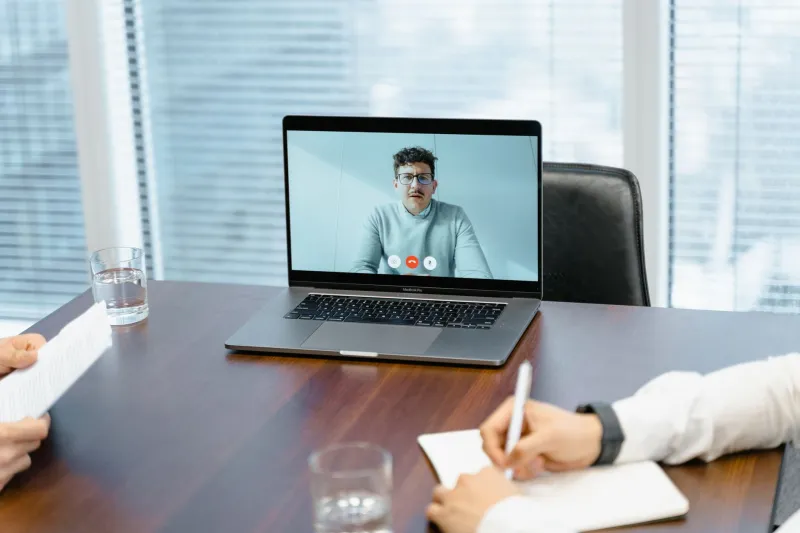
On the ethical side, the implications of employers, platforms, or institutions having access to inferred emotional states are significant and underexplored. If a hiring algorithm flags your face as conveying low enthusiasm during a video interview, you may not get the job — and you'll almost certainly never know why.
The Consent Problem
Most of the biometric data collection happening in American consumer and workplace environments operates in a legal gray zone. The US has no comprehensive federal biometric privacy law. A handful of states — Illinois, Texas, Washington, and a few others — have enacted specific protections, with Illinois' Biometric Information Privacy Act (BIPA) being the most robust and the source of several significant class-action lawsuits against companies including Facebook, Google, and TikTok.
But for the majority of Americans, the body's involuntary responses are collected with minimal legal protection. The consent that does exist is typically buried in terms of service documents written to be accepted rather than read. The data, once collected, can be sold, shared, or used in ways that bear little resemblance to the original stated purpose.
What makes this particularly insidious is the involuntary nature of the data being collected. When you post something on social media, you're making a choice, however constrained. When your pupil dilates in response to an image, when your heart rate spikes during a meeting, when your face registers a micro-expression before your conscious mind has processed what it's reacting to — you're not making a choice. You're just having a body. And that body is now generating revenue for someone else.
Performing for an Audience You Can't See
What this infrastructure does, over time, is produce a specific kind of self-consciousness. The awareness that your body is being read, even when you can't see who's reading it, changes how you inhabit that body. Some people become more guarded — flatter, more controlled, less expressive in spaces they suspect are surveilled. Others perform positivity for the cameras, calibrating their expressions toward what they imagine the algorithm wants to see.
Both responses represent a kind of colonization of the involuntary. The flinch, the flush, the genuine unguarded reaction — these are being trained out of people not by social pressure but by the architecture of the spaces they move through.
There's a term in performance studies for the experience of being watched: the gaze. What's new about the biometric economy is that the gaze is no longer attached to a person. It's structural. It's in the shelf display and the webcam and the wellness wearable. It doesn't get tired. It doesn't look away.
The Body That Belongs to You
The question worth sitting with is not just regulatory — though better regulation is clearly necessary. It's deeper than that. It's about what it means to have a body in a world that has decided your body's most private moments are raw material.
The involuntary response is the last genuinely unperformed thing most people have. The flinch before the mask goes on. The tell before the edit. These moments have always been where the most honest human experience lives — the stuff that can't be curated or managed or optimized.
When those moments become product, something gets lost. Not just privacy, though that too. Something about what it means to be a body that belongs to itself.