Buffering Bodies: How the Lag Between Us Rewrote the Rules of Human Presence
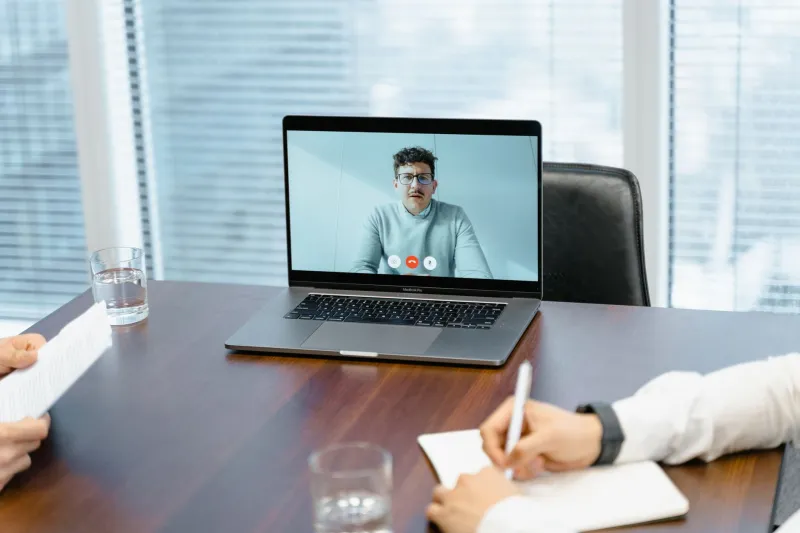
There's a specific kind of horror in watching yourself talk. Not the ordinary discomfort of hearing your voice on a recording — that's old, familiar. This is something newer and weirder: you're mid-sentence, and your face on screen is still finishing the last one. Your mouth is moving in the present. Your reflection is stuck in the past. And your whole body, without anyone asking it to, starts negotiating the gap.
Welcome to the post-Zoom body. It's been performing under fluorescent light, into a laptop camera, across a half-second of digital dead air, for long enough now that the performance has become second nature. And like all second natures, it's quietly rewriting the first one.
The Pause That Wasn't There Before
Ask any communication coach who worked pre-2020 what a natural conversational pause looks like, and they'll describe something fluid — a beat, a breath, a handoff. The other person reads your trailing energy and picks up the thread. It's almost musical.
Now ask them what it looks like on video. The answer is: completely different.
Digital lag — even a fraction of a second — destroys the musicality of conversation. It turns handoffs into collisions. You finish speaking, the other person doesn't hear the end of your sentence yet, they start talking, you hear their voice and keep going, and suddenly everyone is frozen, doing that particular grimace that means no, you go, no really, you go, I'll wait.
So what did we do? We adapted. Specifically, our bodies adapted. Most of us now carry a micro-hesitation at the end of a thought when we're on video calls — a beat longer than we'd use in person, a slight forward lean, a visual check of the other person's face before we fully release the floor. We didn't learn this consciously. We trained it in, rep by rep, failed conversation by failed conversation, until the buffer became built in.
It's a new gesture. Not quite human, not quite machine. Something in between.
Your Own Face as Special Effect
Here's the thing nobody warned us about when video calls went mainstream: you'd be watching yourself the whole time. In person, you can't see your own face. On Zoom, it's right there in the corner — a tiny, slightly delayed version of you, performing for you, judged by you in real time.
The psychological literature on this is still catching up, but performers have known for decades what a monitor does to a body. When actors first see themselves on playback, they almost always overcorrect. Too much stillness. Too much expression. The act of watching yourself collapses the difference between being and performing, and the body gets confused about which job it's doing.
For most Americans, video calls turned this into a daily experience. And the result is a kind of chronic self-surveillance that lives in the body now — a constant, low-grade awareness of what you look like while you're doing something else. People report holding their faces differently on calls. Sitting straighter than they would in person. Suppressing the kinds of ambient movement — fidgeting, looking away, checking a phone — that would be totally normal face-to-face.
The screen made us all into background performers in our own lives.
Desync as a New Physical Language
Lag didn't just change how we wait. It changed how we signal.
In-person conversation is full of micro-signals — tiny nods, eyebrow flickers, the slight forward pull of someone who's about to speak. They're fast, layered, and mostly unconscious. They work because the timing is shared. Everyone is in the same room, on the same clock.
Video kills the shared clock. Those micro-signals still happen, but they arrive out of context, stripped of their timing, and land as noise instead of signal. So bodies compensated by going bigger. Nods became more pronounced. Eyebrows started doing more work. The "I'm listening" face — that particular attentive, slightly performative expression that reads clearly on camera — became a staple of American professional life.
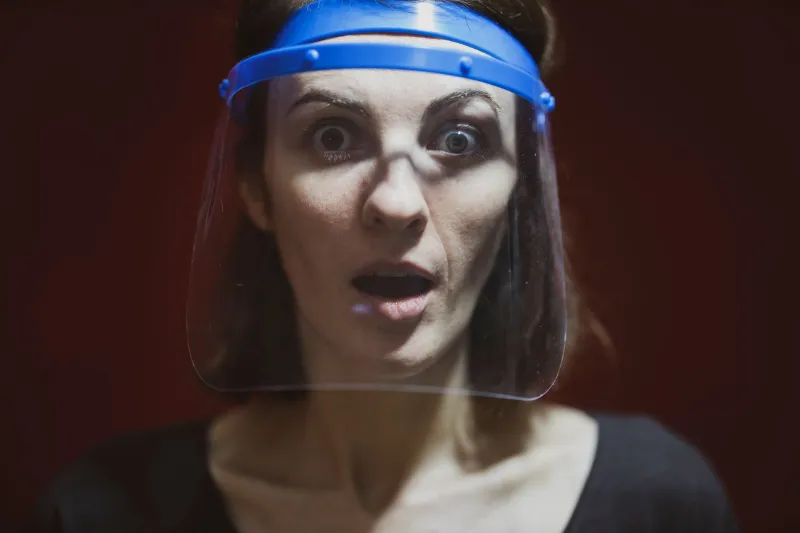
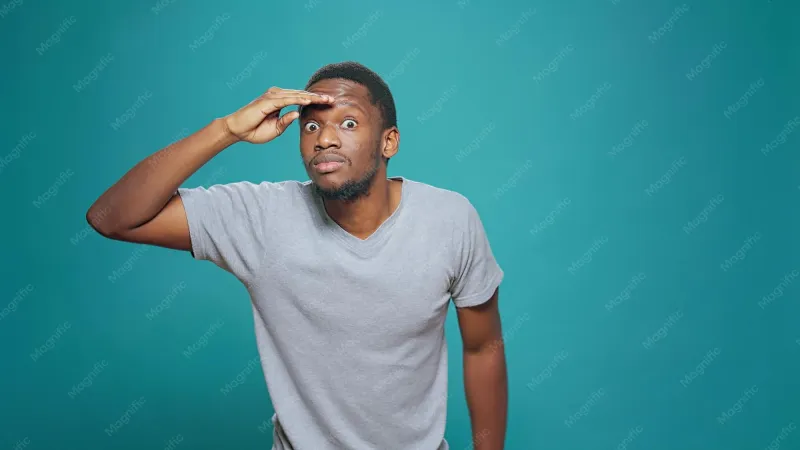
Streaming platforms accelerated this in a different direction. Reaction culture on TikTok, YouTube, and Twitch built an entire vocabulary around the exaggerated body response: the jump scare clutch, the hands-on-face shock, the slow lean-in of dawning comprehension. Some of it is performance for the camera. But a lot of it is genuine — bodies that have been trained by desynchronized media to communicate in broader, clearer, more legible strokes.
We got louder, physically, because the channel got noisier.
The Uncanny Valley of the Self
There's a concept in robotics called the uncanny valley — the zone where something looks almost human but not quite, and triggers deep unease rather than connection. Most people think of it in terms of CGI faces or humanoid robots. But there's a version of it that lives in your laptop camera.
Watching yourself on a slight delay, under bad lighting, in a compressed video frame, is a genuinely strange experience. The face is yours, but the timing is off. The expressions are familiar, but the context is wrong. You're watching a performance of yourself that you didn't quite authorize, and the body responds to that strangeness in subtle ways — stiffening slightly, or overcorrecting toward naturalness in a way that reads as anything but.
This is the part that doesn't get talked about enough: the delay doesn't just affect how we communicate with others. It affects how we relate to ourselves. The version of you that lives on screen has become a kind of alter ego — present, visible, slightly off. And managing that alter ego takes real energy, even when you're not consciously aware of doing it.
After the Glitch, a New Grammar
None of this is entirely new. Every communication technology reshapes the body that uses it. The telephone trained people to enunciate differently. Television taught Americans to perform emotion in particular registers. Social media built a whole architecture of self-presentation that changed how people moved through real-world spaces, always half-composing the photo.
Video lag is just the latest chapter. What makes it interesting — and distinctly of this moment — is how fast it happened and how universally it landed. Within a couple of years, a huge portion of the American workforce, social scene, and family life moved onto video platforms and absorbed their rhythms into the body.
The hesitation before speaking. The exaggerated nod. The held-still posture. The face you make when you're waiting for someone else to finish buffering. These aren't bugs in how we communicate now. They're features — a new grammar written in pauses and pixels, running underneath every conversation.
Your body didn't just learn to live with the lag. It learned to speak it.
And somewhere in that translation — between what you meant to say and what the signal carried — something genuinely new got made.