When Your Body Blinks, Someone's Taking Notes
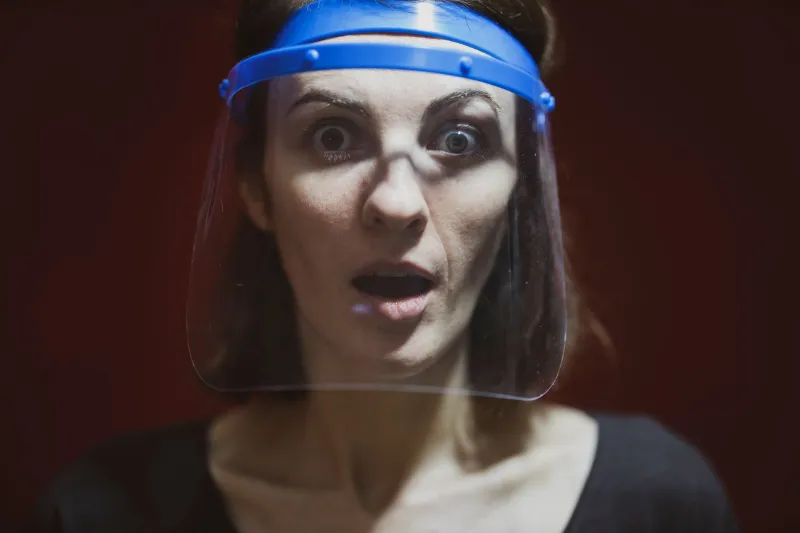
You didn't mean to gasp. You didn't plan to grip your armrest, or let your face crumple for half a second before you pulled it back together. But it happened — and somewhere, someone logged it.
Welcome to the flinch economy, where your most unguarded physical moments have become some of the most valuable data points in digital commerce.
The Most Honest Thing About You
Marketers have spent decades chasing authenticity. Focus groups lie. Surveys reflect what people wish they felt. Even social media engagement can be gamed. But the body? The body doesn't negotiate.
A startle response fires in under 200 milliseconds — faster than conscious thought, faster than social performance, faster than the part of your brain that knows it's being watched. Micro-expressions flash across the face in fractions of a second, carrying emotional content that even trained human observers frequently miss. Pupil dilation responds to arousal and interest with zero input from your executive function.
For neuroscientists, these signals are fascinating windows into human cognition. For a growing sector of the tech and advertising industry, they're something else entirely: a clean, unfiltered data stream that bypasses every defense mechanism consumers have built up over years of media literacy training.
"We've gotten very good at ignoring ads," says one behavioral researcher who asked not to be named because of ongoing industry contracts. "The industry knows that. So the pivot is toward capturing response before the filter kicks in. The body is the last honest frontier."
Reaction Content Is the Product
You've seen it play out on your own feeds. Reaction videos — once a niche corner of early YouTube — are now a dominant content format. The appeal seems simple: watching someone else experience something is relatable, communal, entertaining. But the infrastructure underneath that format is considerably more complex.
Creators who film themselves reacting to horror clips, shocking news, emotional music, or viral moments are generating something beyond entertainment. Their faces, in real time, are producing biometric performance data. Platforms track engagement patterns correlated with specific facial expressions. Advertisers pay premiums to appear alongside content that reliably produces high-arousal reactions — surprise, fear, delight — because those emotional states increase purchase intent and brand recall.
The creator's body becomes the instrument. The flinch is the feature.
Some creators are aware of this dynamic and deeply uncomfortable with it. Others have leaned into it so completely that they've learned to perform genuine reaction — a strange loop where authenticity becomes its own choreography.
"There's this pressure to have a big reaction," says one mid-tier content creator based in Atlanta who films gaming and horror content. "And at some point I caught myself wondering if I was actually scared or if I'd just trained myself to express fear because it performed better. That was a weird moment."
Biometrics in the Wild
Reaction content is just the visible layer. Beneath it, a quieter and more pervasive form of bodily data collection is already embedded in everyday American life.
Retail analytics firms use ceiling-mounted cameras to track facial expressions as shoppers move through store layouts, mapping emotional response to product placement. Streaming platforms have experimented with webcam-enabled attention tracking to measure whether viewers look away during certain scenes. Insurance companies in the US have begun piloting wearables that monitor stress indicators — heart rate variability, galvanic skin response — with premium incentives attached.
Facial recognition software used in some customer service kiosks now includes emotion detection modules that flag agitation or confusion and route customers accordingly. The data generated doesn't disappear. It feeds models.
Privacy advocates have been raising alarms about this for years, but the conversation tends to get absorbed into broader debates about surveillance that feel abstract to most people. What's harder to abstract is this: your face, reacting honestly to a price increase at your grocery store, may be informing that store's pricing strategy for the next quarter.
"The legal framework in the US is genuinely inadequate for this moment," says a digital rights attorney based in Chicago who works on biometric privacy cases. "Illinois has BIPA, a handful of states have something. Federally? There's almost nothing protecting your involuntary physical responses from commercial harvesting. People assume there must be a law. There usually isn't."
The Reclamation Project
But something interesting is happening on the edges of this landscape. A growing number of performers, activists, and just regular people who've gotten creeped out enough to act are pushing back — not by hiding their bodies, but by taking deliberate control of what their bodies express.
Some performance artists are working explicitly with this tension. There's a thread of contemporary work — in theater, in live streaming, in installation art — that treats the educated, intentional control of bodily response as a political act. If your micro-expressions are the data, then learning to modulate them is a form of resistance.
One Brooklyn-based performance collective has built an entire show around teaching audiences somatic awareness techniques — the kind used by actors, therapists, and military personnel — specifically framed as tools for navigating a world that profits from your unguarded moments. The show includes segments where audience members practice controlling their startle response while being filmed, then watch the footage back.
"It's not about suppressing emotion," the collective's co-founder explains. "It's about understanding that your body is always performing, whether you consent to that or not. Once you know that, you get to decide what the performance is."
That framing — the body as perpetual performance, and autonomy as the conscious direction of that performance — sits right at the heart of what makes this moment so strange. We built a culture of authenticity. We made realness the premium product. And then we built systems that extract value from realness without asking.
What You Owe Your Own Flinch
There's something worth sitting with here that goes beyond policy or platform ethics. The flinch, the gasp, the involuntary tension in your shoulders when something startles you — these are among the most purely human things you do. They predate language. They predate culture. They're the body's oldest reporting system, built to keep you alive.
The fact that this system is now being tapped for ad targeting and shelf optimization isn't just a privacy issue. It's an intimacy issue. It's a question about what parts of yourself you still get to keep.
You can't fully opt out — the cameras are already there, the platforms are already watching, the models are already trained. But you can, as those Brooklyn performers are arguing, get curious about your own responses. You can learn what your body does before you know you're doing it. You can treat your involuntary self as something worth understanding rather than something that just happens to you.
Because if you don't know your own flinch, someone else is going to make money off it. And they won't even say thank you.