Head Down, Spine Curved: How the Endless Feed Rewrote the American Body
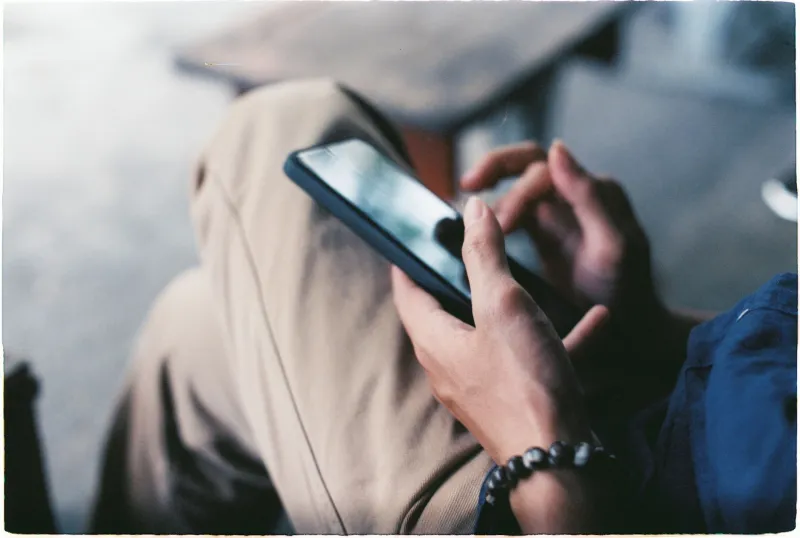
Watch people on a subway platform, a waiting room, a park bench. The posture is almost universal now. Head dropped forward, chin angled down, shoulders rounding inward like a slow collapse toward the phone. One hand cradles the device. The thumb moves in that hypnotic upward flick—scroll, scroll, pause, scroll. The body has found a new resting shape, and it wasn't designed by any ergonomist or anatomist. It was designed by an algorithm.
We call it the scroll slouch, and it's become one of the most legible physical signatures of contemporary American life.
The Mechanics of Surrender
Let's start with the physics, because they're genuinely alarming. The human head weighs somewhere between ten and twelve pounds in neutral position—chin parallel to the ground, ears aligned over the shoulders. Tilt that head forward just fifteen degrees, the angle most of us adopt when glancing at a phone held at chest level, and the effective load on the cervical spine jumps to roughly twenty-seven pounds. At forty-five degrees—common for people scrolling with the phone in their lap—that load climbs to nearly fifty pounds.
Fifty pounds. On a structure that evolved to carry twelve.
Spinal surgeon Kenneth Hansraj published research on this back in 2014, and the numbers went briefly viral before being absorbed into the ambient background noise of everyone continuing to scroll anyway. What Hansraj was describing wasn't just neck pain. He was describing a structural transformation of the spine, one being performed on hundreds of millions of people simultaneously, in real time.
The cervical curve flattens. The thoracic spine rounds. The lumbar region compensates. The shoulders roll forward to follow the head, narrowing the chest cavity and reducing lung capacity. Breathing shallows. The diaphragm, compressed by the forward fold, can't fully descend. The body, in its effort to sustain this position for hours, recruits muscles that were never designed for prolonged static load—and those muscles develop a new normal.
A Posture That Means Something
Here's what's easy to miss in the clinical discussion: posture isn't just structural. It's expressive. It's communicative. The body doesn't just hold a shape—it performs one, and that performance carries meaning both outward and inward.
The scroll slouch reads, from the outside, as withdrawal. As unavailability. As a body that has opted out of the shared physical space it's occupying. And that reading isn't wrong. The posture is a kind of closing—arms drawn in, gaze directed down and away, the torso folded slightly over the device like a person hunching over something they don't want you to see.
But it also reads, from the inside, as something more ambivalent. There's a quality of surrender in it. A giving-over. The thumb flicking upward is one of the smallest possible motor actions, and yet it commands the body's full attentional resources. The rest of the physical self goes quiet, dim, held in suspension while the eyes and the algorithm do their thing.
Some neuroscientists describe this state as a kind of low-arousal trance—not quite dissociation, but a narrowing of sensory attention to a single channel. The body is present but not inhabited. It's running on autopilot while the mind surfs content.
The Anxiety Signature
What makes the scroll slouch culturally interesting—and a little heartbreaking—is what it reveals about the ambient emotional state of the country. Body language researchers have long associated the forward-head, rounded-shoulder position with defensive withdrawal, low confidence, and anxious self-protection. It's the posture of someone making themselves smaller, less visible, less exposed.
That this has become the default resting position for millions of Americans is not a coincidence. It's a physical record of something. A nation stress-scrolling through a news cycle that never ends, looking for information and finding mostly more to worry about, the body curling around the phone the way it might curl around a wound.
The device promises connection and delivers stimulation. The body interprets the constant low-grade alertness of the feed—the outrage, the humor, the desire, the dread—as a kind of threat environment. And it responds accordingly, drawing inward, bracing slightly, maintaining that forward fold as though preparing for an impact that never quite arrives.
What Gets Lost in the Fold
There's a performance dimension to all of this that tends to get overlooked. When the spine rounds and the chest closes, something happens to the voice. Try it: slump into scroll position and speak. Now sit up, chest open, shoulders back, and say the same thing. The difference in resonance, projection, and authority is immediate and significant. The body's instrument changes shape, and the music it makes changes with it.
Public speaking coaches, voice teachers, and theater directors have been fighting this battle for years. Young people who've grown up with smartphones arrive with postures that literally compress their capacity for physical presence. The breath is shallower. The voice is smaller. The body has learned, through thousands of hours of practice, to occupy less space.
And presence—real, embodied presence—requires space. It requires a body that's fully inhabited, a spine that's upright, a chest that's open enough to let the breath move.
The Counter-Movement
There's a growing resistance, and it's showing up in unexpected places. The somatic wellness space has exploded with practices specifically designed to reverse the scroll slouch—not just yoga and pilates, but targeted interventions for tech-induced postural collapse. "Tech neck" has its own physical therapy protocol now. There are standing desk evangelists and phone-free restaurant sections and digital detox retreats charging serious money to give people back their spines.
More interesting are the people doing it without the retreat, without the protocol. Just choosing to put the phone down. To look up. To let the body unfold and take up its full vertical height in a room. It's a small act, and it shouldn't feel radical.
But in 2025, it kind of does.