Your Face Already Answered: The Involuntary Tells Written Across Your Features
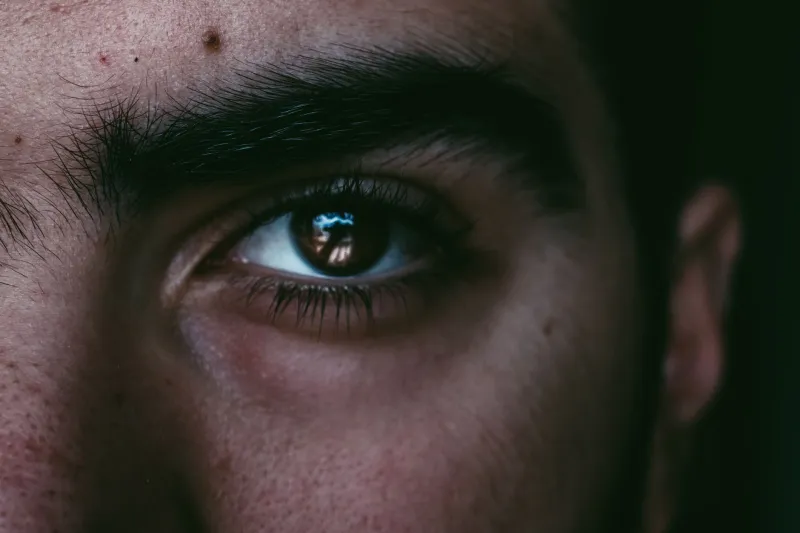
There's a moment in every difficult conversation — the one where someone says something that lands wrong, or right, or somewhere complicated — where your face moves before you do. It's not a wince exactly. It's smaller than that. A flicker. A quarter-second of something true passing across your features like a cloud shadow over pavement. Gone before anyone could name it. Except, increasingly, someone can.
Welcome to the age of the micro-expression, where your face is writing checks your poker face can't cash.
The Science of the Slip
Psychologist Paul Ekman spent decades cataloguing what he called micro-expressions — involuntary facial movements that last anywhere from 1/25th to 1/5th of a second. Unlike the expressions we deliberately perform (the polite smile, the sympathetic nod, the professional neutral), micro-expressions aren't chosen. They're neurological reflexes, the face's raw data before the social editing kicks in.
Ekman identified seven universal micro-expressions that appear to cross cultural lines: happiness, sadness, contempt, disgust, fear, anger, and surprise. These aren't learned behaviors. They're factory settings. And because they happen so fast — often below the threshold of conscious awareness — they're nearly impossible to fake or suppress consistently.
Here's the part that makes this more than just interesting bar trivia: you're producing these expressions constantly, and most of the time, you have no idea you're doing it. Your body is narrating your inner life without asking for your permission.
The Job Interview You Thought You Nailed
Consider the standard American job interview. You've rehearsed your answers. You've researched the company. You've picked the outfit that says competent but approachable. You walk in performing the best version of yourself.
Then the interviewer mentions the salary range, and for 200 milliseconds, something flashes across your face. Maybe it's the ghost of disappointment. Maybe it's a flicker of contempt at the lowball offer. You recover instantly. You say the right words. But that interviewer — if they're trained, if they're paying attention, if there's a camera feeding your image into an AI assessment tool — already caught it.
This isn't hypothetical. Companies like HireVue have used AI-powered video interview tools that analyze facial movements, vocal tone, and word choice to generate candidate assessments. The technology has faced significant criticism and some rollback, but the underlying capability isn't going anywhere. Your face, in a high-stakes moment, becomes data. And data gets interpreted.
Reading the Room vs. Reading the Face
There's a meaningful difference between human intuition and algorithmic analysis, and it matters more than we usually acknowledge.
When a person reads your micro-expressions — consciously or not — they're doing so within a web of context. They know the conversation. They can feel the room. They bring their own emotional intelligence, their own biases, their own uncertainty. A good therapist or a skilled negotiator might pick up on your fleeting tells, but they're also humble about what they're seeing. They ask follow-up questions. They hold their interpretations loosely.
An algorithm doesn't do that. It scores. It classifies. It produces a confidence percentage on whether you're being deceptive, whether you're enthusiastic, whether you're a flight risk. It doesn't ask what else might explain that 180-millisecond contraction around your eyes. It doesn't know that you're grieving, or exhausted, or neurodivergent in ways that make your facial expressions not map neatly onto the training data.
That's where this gets genuinely uncomfortable.
Dating, Deception, and the Body That Won't Lie
Pull this out of the corporate context and into something more intimate, and the stakes shift but don't shrink.
Anyone who's been in a relationship long enough has had the experience of catching something on their partner's face — a flash of something — before the conversation even starts. You ask what's wrong. They say nothing. But you saw it. That involuntary tell, that honest dispatch from the body, creates the kind of tension that no amount of verbal reassurance can fully dissolve.
In dating, micro-expressions cut both ways. They can signal genuine attraction in ways that feel more trustworthy than words — a spontaneous smile that reaches the eyes, a momentary softening of the face when someone you like walks in. These are the things people mean when they say they could feel the chemistry. The body broadcasting before the mind has drafted its message.
But they can also surface things we'd rather keep private. The flash of irritation at a habit we haven't mentioned yet. The split-second boredom during a story we've heard too many times. The involuntary microexpression of contempt — that asymmetric lip curl Ekman identified as one of the most corrosive signals in relationships — that appears and disappears before we've consciously registered the feeling.
The body insists on honesty. Whether that honesty is welcome is another question entirely.
Can You Train Yourself Out of It?
The short answer is: not really. The slightly longer answer is: sort of, but not in the way you'd hope.
Actors spend years learning to access genuine emotion on demand, which produces authentic micro-expressions rather than suppressed ones. That's a fundamentally different project than trying to eliminate the tells. Interrogation trainers and professional poker players work on reducing the behavioral consequences of micro-expressions — the follow-through behaviors that confirm what the face briefly showed — but the initial flicker tends to survive even intensive training.
What you can do, arguably, is become more aware of your own emotional landscape in real time. Mindfulness practices, somatic therapy, and body-based awareness work all aim at something like this — not suppression, but literacy. Understanding what your face is saying before the moment has passed. That awareness doesn't stop the expressions, but it can change your relationship to them.
Which is its own kind of radical act in a culture that increasingly wants to monetize your involuntary responses.
Who Owns Your Tells?
Here's the question that Incarne keeps circling back to, because it lives right at the intersection of body and story: if your face is producing honest data without your consent, who gets to read it?
Right now, the answer is complicated and uncomfortable. Your employer might. A retail store's emotion-detection software might. A social media platform analyzing your reactions to content might. The law hasn't caught up. Most people don't know it's happening.
There's something almost poetic about the irony — that the most honest parts of us, the parts we can't perform or curate, are the parts being harvested most aggressively. The involuntary, the unguarded, the genuinely human: that's the premium data now.
Your face has always been telling your story. The question is who's been listening, and what they plan to do with what they heard.