Table for One: The Strange Shame of Eating Where Someone Might See You
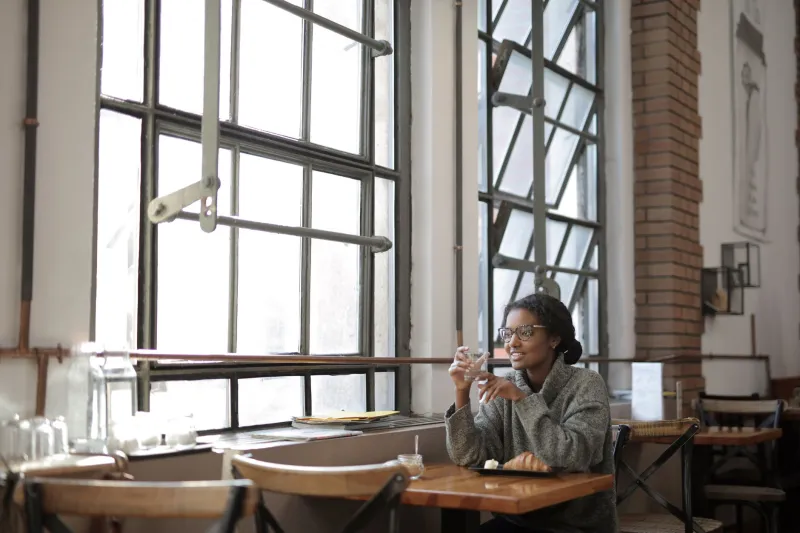
Notice what happens in your body the next time you eat alone in public. Not at your desk with a laptop open as cover. Not scrolling your phone to signal that you're busy, that this is intentional, that you are a person with places to be. Just — alone. With your food. At a table. Visible.
For a lot of Americans, that scenario produces something that lands somewhere between mild discomfort and low-grade dread. The awareness of being seen eating. The performance anxiety of the fork's trajectory. The question of where to look when you're not looking at another person. Eating alone in public is, for many of us, one of the most quietly fraught things a body can do.
That's worth examining. Because eating isn't a luxury or a hobby. It's survival. It's the most fundamental thing a living body does. And we've wrapped it in enough social complexity that doing it visibly, without company, without a story, can feel like exposure.
The Audience We Can't Stop Imagining
Humans are social eaters by deep evolutionary design. Sharing food is one of the oldest forms of trust-building and community-making our species has. Communal meals appear in every culture across recorded history — they're how we mark celebrations, cement relationships, signal belonging. Eating together is a form of saying: I am safe with you. You are safe with me.
Which means eating alone, in public, is a kind of category violation. You're performing a communal act without the community. And in a culture that reads social connection as a proxy for personal worth, that can feel uncomfortably close to being caught without your alibi.
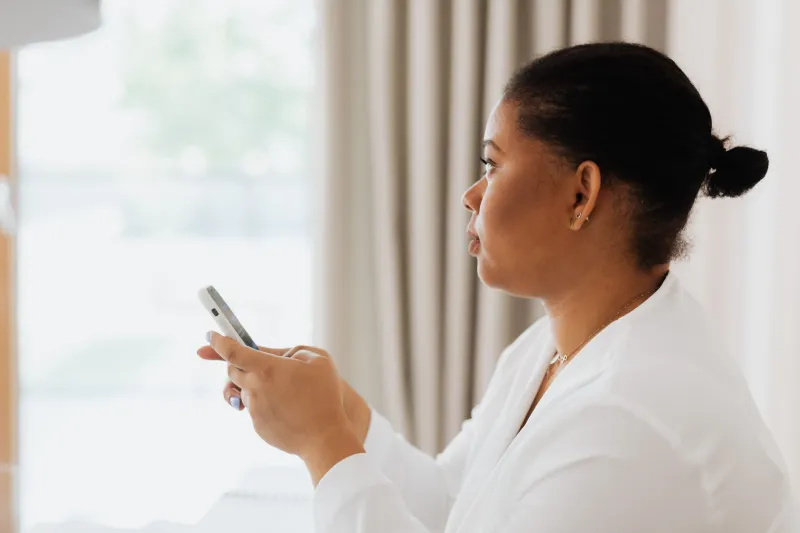
"There's this imagined audience that kicks in," says a thirty-one-year-old marketing coordinator in Philadelphia who described her solo lunch routine to Incarne. "Even if nobody's looking at me, I feel like they're assessing the situation. Like, why is she alone? Is something wrong with her? So I always have my phone out. Always. Even if I'm not using it. It's just — proof of something."
The phone as prop. The laptop as costume. The book as stage dressing. We've developed an entire vocabulary of objects that function as social excuses for the visibility of eating alone — ways of telling the imagined audience that we are not lonely, we are not pathetic, we are simply multitasking. The body needs to eat, but the performance needs a reason.
Appetite as Exposure
There's a gender dimension here that can't be skipped. For women especially, eating in public carries a specific charge that goes beyond solo dining. Appetite itself — the visible act of wanting food, of consuming it without apology — has long been policed in ways that map directly onto how women's bodies are policed more broadly.
The cultural expectation that women eat small, eat delicately, eat as though they aren't really hungry — that's not new. What's shifted is how explicitly it gets performed now, in the age of social media, where what you eat and how you eat it can become content, can be judged, can be screenshot and shared. Women who eat enthusiastically in public report a heightened self-consciousness that isn't just about being alone — it's about the visible fact of appetite, of need, of a body that wants things.
"I've caught myself ordering less than I actually want when I'm alone at a restaurant," admits a twenty-eight-year-old graduate student in Atlanta. "Not because I'm not hungry. But because I feel like what I order is a statement about me. Like my appetite is being evaluated."
This is the body's need being filtered through a performance of acceptability. The stomach knows what it wants. The self-presentation layer overrides it.
What Happens When We Hide the Act
The coping mechanisms are fascinating and a little heartbreaking. People eat in their cars. They take their lunch back to their desk not because they need to work but because the desk provides social cover. They choose restaurants with bar seating specifically because sitting at a bar alone reads differently than sitting at a table alone — there's a narrative there, a character type that makes sense. They time their meals to off-peak hours to minimize witnesses. They order delivery not just for convenience but to make the eating invisible entirely.
This hiding has costs. Eating while distracted — scrolling, working, watching something — consistently produces less satisfaction and often leads to eating more, because the body's satiety signals get drowned out by divided attention. When we use the phone or the laptop to make eating alone feel less exposed, we're also making it less nourishing in a real, physiological sense. The performance of not-really-eating undermines the actual eating.
There's also something lost when we never just sit with the experience of feeding ourselves. Eating is sensory, physical, immediate. It's one of the few activities that is purely, stubbornly embodied — you cannot outsource it, you cannot do it in your head, you cannot experience it through a screen. Rushing it, hiding it, burying it under content consumption means spending a significant portion of your waking life only half-present in your own body.
The Communities Doing It Differently
Not everyone carries the same weight around solo eating. There are real cultural differences in how eating alone is read and experienced.
In Japan, solo dining has long been normalized to the degree that certain restaurants are designed specifically for it — counter seating, individual booths, menus optimized for single portions. There's no narrative of loneliness attached. A person eating alone is simply a person eating.
Within the US, attitudes vary significantly by community. In cities with dense immigrant populations, eating alone at a family-style restaurant or noodle shop carries little of the social anxiety it might at a trendy brunch spot in a predominantly white neighborhood. The cultural script around what solo eating means differs depending on who's reading it and where.
Some younger Americans are actively working to rewrite the script for themselves. Solo dining as self-care. Eating alone as a practice of presence, a form of treating yourself with the same hospitality you'd extend to a guest. There are TikTok accounts dedicated to the aesthetics of solo restaurant meals — nice table, good food, no apology. The phone is still present, but now it's documenting something celebratory rather than providing cover.
The Body Doesn't Need an Audience
At its core, the anxiety around eating alone in public is an anxiety about the body's visibility in its most unguarded state. Eating requires opening the mouth. It involves sounds and textures and the unglamorous mechanics of chewing and swallowing. It's one of the few moments when the body is undeniably, unavoidably physical — not a vehicle for productivity or attractiveness or social connection, but simply an organism keeping itself alive.
That vulnerability is real. And the fact that we've built so many elaborate defenses around it says something important about how American culture relates to the body's needs — particularly when those needs are inconveniently visible.
The body needs to eat. It doesn't need an audience. It doesn't need an excuse. Learning to let it do its most necessary work, without performance and without apology, might be one of the quieter forms of self-respect available to us.